

 한국어
한국어 中文简体
中文简体 日本語
日本語 Español
 русский
About us
Our team is proud to offer on time guarantee and product guarantee to customer satisfaction.
Read MoreContact info
- No. 666, Jingtong Road, Danxi Second Industrial Zone, Danxi Town, Yueqing City, Zhejiang, China
- 1696258355@qq.com
- (+86) 15217722885
- 1540939529@qq.com
- (+86) 17857205859
- (+86) 755-83268071
Waterproof Button Switch for Industrial Control
Industrial control equipment often operates in environments where dust, moisture, oil, cleaning fluids, and vibration may be present. A Waterproof Button Switch can provide a physical control interface while helping protect the switch mechanism from environmental exposure.
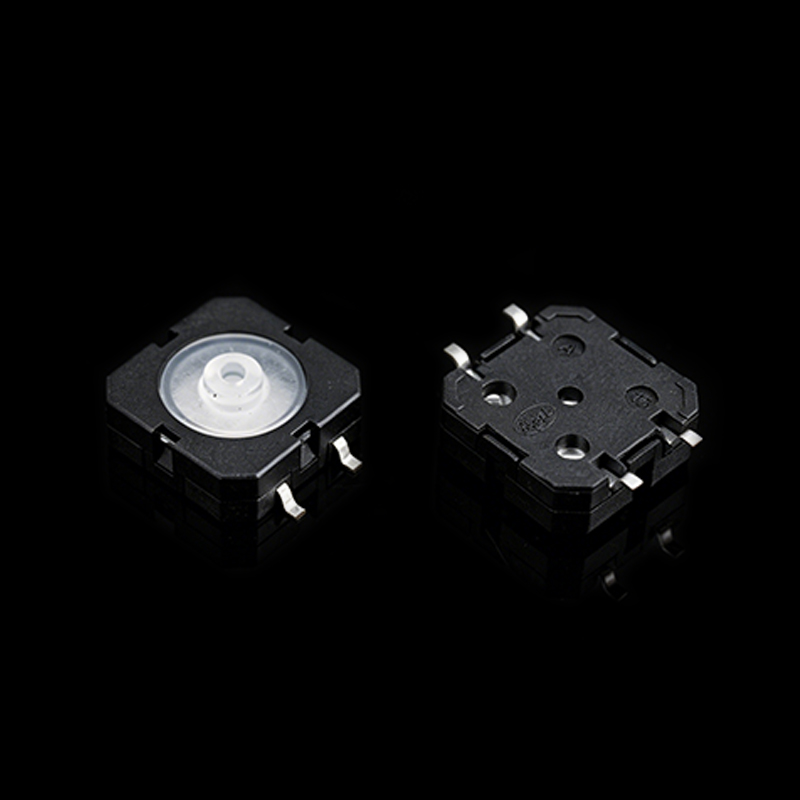
Control panels may include power controls, reset buttons, mode selectors, indicator buttons, and other operator functions. A sealed button can be integrated into the panel while maintaining access to the electrical control circuit.
The switch should be selected according to both the control function and the surrounding working environment.
Panel Mount Construction
Panel mount installation is common for industrial button switches. The switch passes through a prepared panel opening and is secured with a mounting nut, bracket, or similar structure.
A sealing ring can be positioned between the switch and the panel surface. This area requires careful attention because the panel opening itself can become a path for water or dust if the sealing structure is not properly installed.
Panel thickness also needs to correspond with the switch mounting design. The external button should remain accessible after the switch has been secured.
Electrical Requirements
Electrical specifications are important when integrating a waterproof button into an industrial control system.
Rated voltage and rated current should correspond with the circuit. Contact resistance can affect the electrical connection, while insulation resistance is relevant to the separation between conductive elements.
Switch configuration should also match the control circuit. SPST and SPDT arrangements can support different circuit functions, while normally open and normally closed contacts can be selected according to the control logic.
The electrical load should be reviewed together with the switch specification before installation.
Mechanical Operation
Industrial operators may use buttons repeatedly throughout equipment operation. Operating force, travel, tactile feedback, and actuator structure therefore require consideration.
A button with a suitable tactile response can help the operator recognize activation through touch. The external actuator should also provide enough movement without contacting surrounding panel surfaces.
Mechanical life is another consideration for equipment expected to receive repeated button operations. The appropriate specification depends on the actual use pattern of the machine.
Industrial Environmental Conditions
Industrial environments can vary significantly. Some equipment may operate in clean production areas, while other machines can be exposed to dust, water, oil, coolant, or cleaning agents.
Temperature changes can also influence material behavior and sealing performance. Engineers should check the operating temperature range of the switch and consider the conditions around the control panel.
Vibration is another factor. The switch mounting structure needs to remain secure during normal equipment movement.
Illuminated Waterproof Buttons
Some control panels use illuminated buttons to provide visual status information. An LED can indicate power, operation, warning conditions, or another equipment state.
Ring illumination and dot illumination are common design approaches. The light source can be combined with different button shapes and symbols according to the panel layout.
Electrical specifications for the LED should be checked separately from the switch contacts. Wiring also needs to follow the intended circuit arrangement.
Button Identification
Industrial control panels often contain several buttons with different functions. Clear labeling helps operators recognize each control.
Symbols, printed text, engraved markings, and illuminated elements can be used for identification. The button surface should remain readable under the expected lighting conditions.
The physical position of each button should correspond with the control sequence and panel layout. Designers should also consider whether operators will use gloves when selecting button dimensions and operating force.
Protection Against Cleaning
Many industrial machines require regular cleaning. A waterproof button should therefore be selected according to the cleaning conditions expected in the application.
Water jets, wiping, detergents, and other cleaning methods can place different demands on the sealing system.
The switch protection rating should be considered together with the panel, enclosure, cable entries, and connectors. A protected switch cannot compensate for an unsealed opening elsewhere in the equipment.
Installation and Wiring
During installation, the panel opening should be prepared according to the switch drawing. The sealing ring needs to sit correctly, and the mounting hardware should be tightened according to the manufacturers instructions.
Wiring should be arranged so that cable movement does not place unnecessary force on the switch terminals. Connector and cable entry protection should also correspond with the enclosure design.
After installation, the button can be checked for smooth movement, proper activation, and alignment with the panel.
Selecting for Industrial Applications
A suitable waterproof button switch should match the complete equipment requirement. Engineers can review protection rating, panel dimensions, electrical characteristics, operating force, travel, contact configuration, temperature range, and mounting method.
The working environment should also be considered. Equipment exposed to dust may require different protection considerations from equipment exposed to water or cleaning fluids.
By reviewing electrical, mechanical, and environmental conditions together, the switch can be integrated more effectively into an industrial control system.

©️ 2026 Wenzhou Hanjing Electronics Co., Ltd.

Waterproof Switch Manufacturer
