

 한국어
한국어 中文简体
中文简体 日本語
日本語 Español
 русский
About us
Our team is proud to offer on time guarantee and product guarantee to customer satisfaction.
Read MoreContact info
- No. 666, Jingtong Road, Danxi Second Industrial Zone, Danxi Town, Yueqing City, Zhejiang, China
- 1696258355@qq.com
- (+86) 15217722885
- 1540939529@qq.com
- (+86) 17857205859
- (+86) 755-83268071
Through Hole Tactile Switch: Key Specifications for PCB Applications
When selecting a Through Hole Tactile Switch for a PCB application, electrical specifications should be reviewed together with the requirements of the complete circuit. A tactile switch is commonly used as a momentary input component, allowing an operator to send a control signal by pressing the actuator. The switch therefore needs to match the electrical conditions of the equipment where it will be installed.
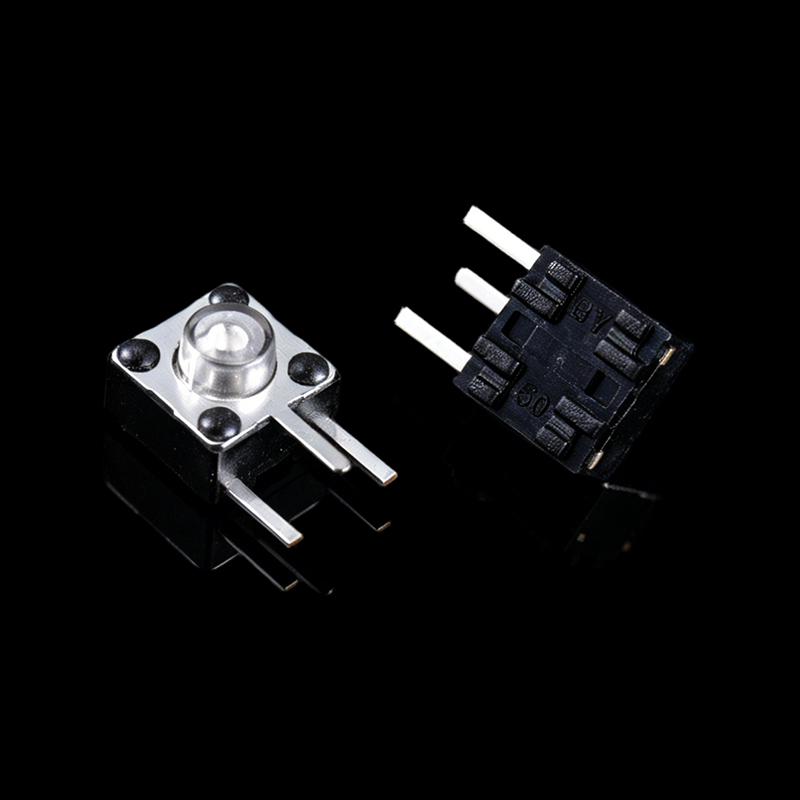
Rated voltage and rated current are important points during product selection. Buyers should check the electrical requirements of the circuit and compare them with the specifications provided for the switch. Using a component outside its specified electrical conditions can affect contact performance and product reliability.
Contact resistance is another parameter that can be considered. It describes the resistance present at the switch contact when the circuit is closed. A suitable contact structure can support stable signal transmission during normal operation.
Contact configuration should also correspond with the intended circuit design. Many tactile switches are designed for normally open momentary operation, where the circuit closes when the button is pressed and returns to its original state after release. Understanding the internal contact arrangement can help engineers select a suitable component for the control function.
The switch should also be evaluated according to the type of signal being controlled. A tactile switch used as a user input may have different requirements from a switch incorporated into a control panel or electronic instrument. Reviewing the complete electrical environment can help prevent mismatches during PCB development.
Mechanical Specifications
Mechanical specifications are closely connected with the way a tactile switch feels and functions during operation. Operating force, travel distance, actuator height, body dimensions, and service life can all influence the suitability of a switch for a particular device.
Operating force refers to the force required to activate the switch. A lighter force can provide an easy pressing action, while a firmer force may help prevent unintended activation. The suitable force depends on the intended user interaction and the design of the equipment.
Travel distance describes the movement of the actuator during pressing. The relationship between travel and tactile feedback can affect how users recognize a successful input. Engineers can compare different switch structures according to the desired button response.
Actuator height should be checked against the enclosure and external button design. If the actuator does not correspond with the distance between the PCB and the outer panel, the switch may not provide the expected operating position.
Body dimensions are also relevant to PCB layout. The switch needs to fit within the available board area while maintaining suitable clearance from surrounding components.
Mechanical and electrical life are additional specifications to review. The expected operating environment, pressing frequency, and equipment function can influence the required durability characteristics.
PCB and Product Selection
Through hole construction provides a direct mechanical connection between the switch terminals and the PCB. The terminals pass through prepared holes and are secured through soldering. This structure should be considered when creating the PCB layout and selecting the corresponding component.
Pin configuration and spacing need to match the board design. Engineers should check the switch drawing, terminal arrangement, body dimensions, and recommended PCB hole pattern before preparing production files.
The switch should also be compatible with the enclosure and external button structure. Actuator height, button position, panel thickness, and surrounding clearance can affect the final assembly.
For purchasing teams, technical documentation can make product comparison easier. Product drawings, electrical specifications, mechanical specifications, material information, sample availability, and customization options can all help during supplier evaluation.
A physical sample can also be useful when the switch is being integrated into a new PCB. It allows engineers to verify fit, pressing feel, actuator position, soldering conditions, and interaction with the enclosure before the design moves into larger scale production.

©️ 2026 Wenzhou Hanjing Electronics Co., Ltd.

Waterproof Switch Manufacturer
